10 Interior Design Styles to Try on Your Own Room With AI
You don’t need a designer’s retainer or a demolition permit to see your living room reimagined. Point your phone at the space, upload the photo, and an AI tool renders a photorealistic redesign in roughly 30 seconds. That means you can audition Scandinavian one minute and Industrial the next, all before you buy a single throw pillow. Below are the 10 interior design styles worth testing on your own room, what each one actually looks like, and who it suits best.
The fastest way to compare styles is to generate them side by side from one photo of your actual room. Tools like GenRoom AI turn a single snapshot into a photorealistic redesign in about 30 seconds, so instead of guessing whether Coastal or Contemporary fits your space, you see both rendered on your real walls, windows, and furniture footprint. Below, each style includes a quick answer up top so you know at a glance whether it belongs on your shortlist.
1. Scandinavian
Scandinavian is the best style for small, low-light rooms that need to feel bigger and brighter. It leans on white and pale-gray walls, light oak or ash floors, and clean-lined furniture with tapered legs. Textiles do the heavy lifting: chunky wool throws, sheepskin, and linen add warmth so the minimalism never feels cold. Greenery and a few black accents keep it from washing out. It suits renters and first-time decorators who want a calm, forgiving look that photographs beautifully and works in almost any apartment. If your space is short on square footage and natural light, Scandinavian will make it breathe.
2. Japandi
Japandi is best for people who want minimalism with warmth and soul rather than a stark, empty room. It fuses Japanese wabi-sabi with Scandinavian function: low-slung wooden furniture, handmade ceramics, muted earthy tones, and a deliberate sense of negative space. Nothing is glossy or loud. Natural materials like bamboo, stoneware, and raw wood carry the mood, and every object earns its place. Japandi suits homeowners who crave a quiet, grounding environment and are willing to declutter to get it. It is the antidote to a room that feels busy but not restful.
3. Modern
Modern is the right choice for anyone who wants clean lines, open space, and zero fussy ornamentation. Rooted in mid-20th-century principles, it favors flat surfaces, neutral palettes with a single bold accent, and a strict “less but better” philosophy. Furniture is low, geometric, and often built from steel, glass, and molded materials. Clutter is the enemy. Modern suits professionals and tech-forward households who want a streamlined, uncluttered backdrop that feels intentional. If you’re drawn to gallery-like simplicity and hate visual noise, Modern delivers.
4. Industrial
Industrial works best in lofts, open-plan spaces, and rooms with tall ceilings or exposed structure. Think raw brick, concrete, weathered wood, and black metal, paired with Edison-bulb lighting and salvaged or vintage furniture. The palette is moody: charcoal, rust, and warm browns. Nothing hides, so ductwork, pipes, and beams become features rather than flaws. Industrial suits creatives, urban dwellers, and anyone who loves an unfinished, warehouse-cool edge. If your space already has exposed brick or concrete, this style stops fighting the architecture and starts celebrating it.
5. Coastal
Coastal is the best fit for anyone who wants a light, breezy, vacation-at-home feeling year round. It relies on whites, sandy neutrals, and soft blues, paired with natural textures like rattan, jute, linen, and driftwood. Rooms stay airy and sun-washed, with plenty of natural light and casual, comfortable furniture. It avoids kitschy nautical clichés in favor of a relaxed, organic palette. Coastal suits families, second-home owners, and anyone who wants their space to feel like a permanent exhale. If a calm, sunlit retreat is the goal, this is your style.
6. Mid-Century Modern
Mid-century modern is ideal for people who love warm wood tones, retro character, and iconic furniture silhouettes. Born in the 1950s and 60s, it pairs organic curves with clean function: teak and walnut, tapered legs, and statement pieces like egg chairs and sunburst clocks. The palette mixes warm neutrals with pops of mustard, olive, teal, and burnt orange. It suits design enthusiasts and collectors who want personality without chaos. Mid-century modern also blends effortlessly with modern and Scandinavian, making it one of the most versatile styles to test first.
7. Minimalist
Minimalist is the best style for anyone overwhelmed by clutter who wants calm through radical simplicity. It strips a room to essentials: a tight, mostly monochrome palette, hidden storage, and only the furniture you truly use. Every surface stays clear, and quality trumps quantity. Texture and subtle tonal shifts prevent it from feeling sterile. Minimalist suits busy professionals, small-space dwellers, and anyone chasing a low-maintenance, distraction-free home. Fair warning: it demands discipline, because there’s nowhere for mess to hide. Done right, it feels like a deep breath.
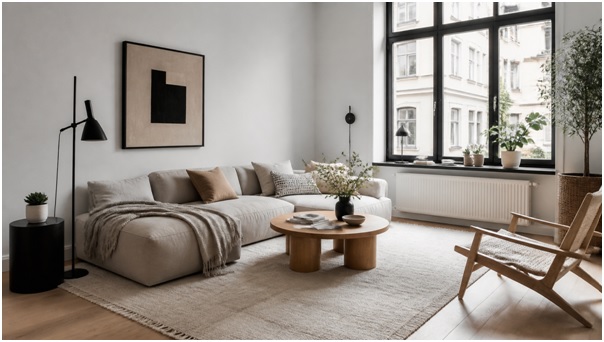
A Scandinavian bedroom uses light woods and layered textiles to feel bright and cozy at once.
8. Bohemian
Bohemian is best for free spirits who want a warm, layered, collected-over-time room full of personality. It celebrates mixing: global textiles, vintage rugs, macramé, plants, and an eclectic clash of patterns and colors. Warm earth tones anchor the chaos, and nothing has to match. Low seating, floor cushions, and abundant greenery make it feel relaxed and lived-in. Boho suits artists, travelers, and anyone who finds strict minimalism suffocating. If you own a lot of meaningful objects and want them all on display, this style turns clutter into curation.
9. Farmhouse
Farmhouse is the top pick for a cozy, welcoming home that balances rustic charm with everyday comfort. Modern farmhouse combines shiplap walls, reclaimed wood, and neutral palettes with practical, family-friendly furniture. Apron sinks, barn-door accents, and vintage-inspired lighting add warmth without feeling like a theme park. Textures stay soft and inviting: cotton, linen, and distressed wood. It suits suburban families and anyone who wants a homey, unpretentious space that still feels current. Farmhouse hits the sweet spot between rustic nostalgia and clean, livable design.
10. Contemporary
Contemporary is best for people who want an of-the-moment look that evolves instead of locking into one era. Unlike modern, which is fixed to a specific design movement, contemporary borrows from current trends: curved furniture, sculptural lighting, layered neutrals with a moody accent, and a mix of matte and natural finishes. It’s polished but not cold, and it changes as tastes change. Contemporary suits homeowners who like staying current and refreshing their space every few years. If you want a room that reads “now” without committing to a single dogma, this is it.
Quick Comparison: All 10 Styles at a Glance
Here is every style, its core vibe, and who it suits best, so you can shortlist in seconds.
| Style | Vibe | Best for |
| Scandinavian | Bright, airy, minimal-but-cozy | Small, low-light rooms and renters |
| Japandi | Warm, calm, decluttered | Those wanting minimalism with soul |
| Modern | Clean lines, uncluttered | Professionals who hate visual noise |
| Industrial | Raw, moody, warehouse-cool | Lofts and urban creatives |
| Coastal | Light, breezy, sun-washed | Anyone wanting a year-round retreat |
| Mid-Century Modern | Retro warmth, iconic shapes | Design enthusiasts and collectors |
| Minimalist | Radical simplicity, calm | Clutter-averse, small-space dwellers |
| Bohemian | Layered, eclectic, personal | Free spirits and collectors |
| Farmhouse | Cozy, rustic, welcoming | Families wanting homey comfort |
| Contemporary | Current, polished, evolving | Those who refresh their space often |
How to Test These Styles on Your Own Room
Upload one clear photo of your room to an AI design tool, pick a style, and review the photorealistic result in about 30 seconds. The workflow is genuinely that short. Shoot your space in good daylight, from a corner so the AI sees the full room, then generate. GenRoom handles interiors, facades, yards, and virtual staging, offers 50+ styles, and includes an AI Editor to tweak specific elements, a Pro Model for sharper detail, 4K exports, and support for up to five photos at once. Free starter credits let you try it before paying, and private generation keeps your renders yours. Paid plans run $6.99 for Start, $19.99 for Basic, and $29.99 for Pro. One caveat: AI visualization is for inspiration and planning, not structural work, so keep a licensed pro in the loop before you move a wall or reroute plumbing.
The Bottom Line
The old way of choosing an interior style meant mood boards, guesswork, and expensive mistakes. Now you can see 10 fully realized versions of your actual room in the time it used to take to find a paint chip. Start with the styles that match your space and lifestyle, Scandinavian for small rooms, Japandi for calm, Industrial for lofts, then let the renders narrow your shortlist. Test broadly, commit once, and buy with confidence.
Frequently Asked Questions
How long does an AI room redesign take?
About 30 seconds per render. You upload a photo, choose a style, and the tool returns a photorealistic version of your room almost immediately, which is what makes testing 10 styles realistic in one sitting.
Do I need design skills to use an AI redesign tool?
No. The process is upload, select a style, and review. There’s no software to learn and no measurements to enter. If you can take a photo and tap a button, you can generate a redesign.
Which interior design style is easiest for beginners?
Scandinavian and Modern are the most forgiving. Both rely on neutral palettes and clean lines, so they’re hard to get wrong and work in almost any space, especially small or low-light rooms.
Can AI redesign more than just living rooms?
Yes. Beyond interiors, GenRoom also handles house facades, yards and gardens, and virtual staging for listings, so the same photo-to-redesign workflow applies to nearly every part of a property.
Will an AI tool replace my interior designer or contractor?
No, and it shouldn’t. AI is excellent for exploring styles and visualizing options, but structural changes, wiring, and plumbing still need licensed professionals. Use the renders as a starting point to communicate your vision.